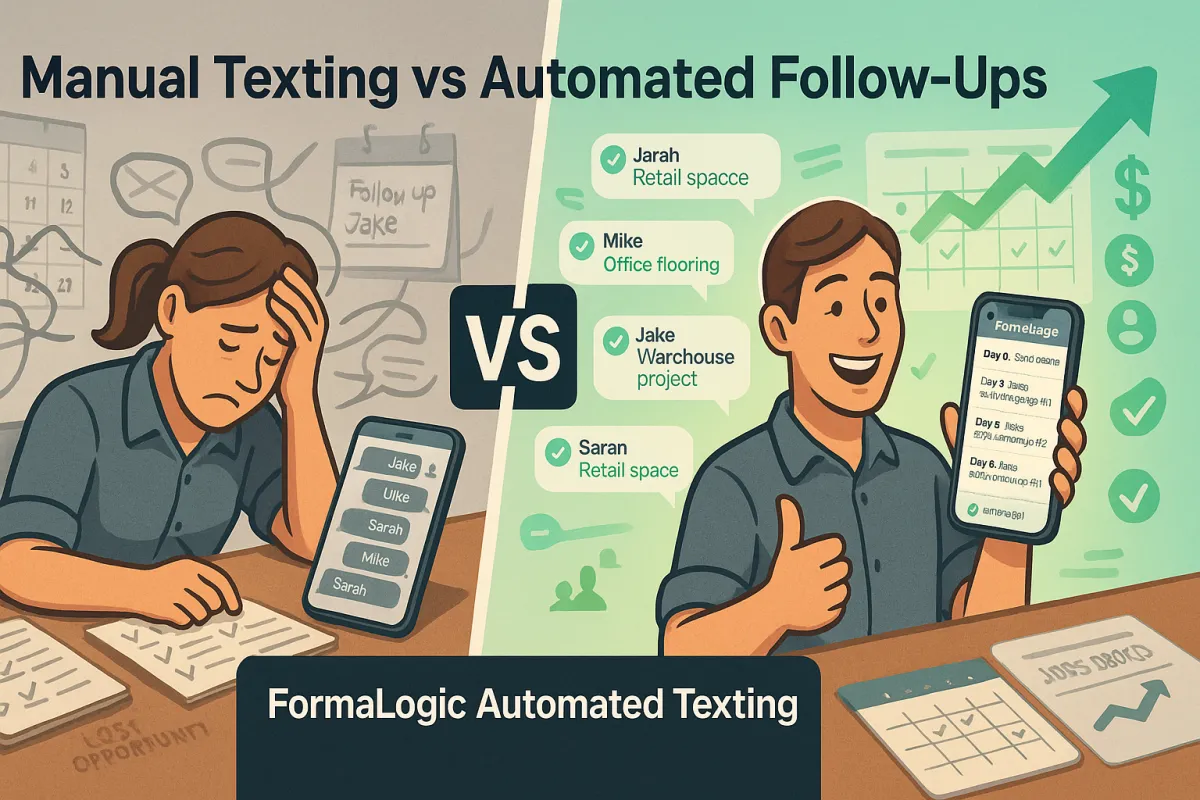
Automate Your Epoxy Flooring Follow-Ups and Double Your Close Rate
Why Epoxy Contractors Who Text Win More Jobs Than Those Who Don't
When someone needs their concrete floor coated with epoxy, they don't decide overnight. The decision takes time. They think about it. They talk to their family or business partner. They compare options. They worry about the cost. They wonder if the timing is right.
This is the reality of the epoxy flooring business. The sales cycle is long. It's not like buying a coffee where you decide and pay in 30 seconds. It's more like buying a car. People need multiple conversations before they commit.
The problem is that most contractors don't understand this. They send a quote. They wait. They send an email reminder a week later. They wait some more. If the customer doesn't respond in 10 days, they give up and move on to the next prospect.
But the customer hasn't given up. They're still thinking about it. They're waiting to hear from you again. They're wondering if you're interested enough to reach back out.
This is where most contractors lose jobs. Not because their quote was too high. Not because another contractor was better. But because they didn't stay in touch.
The contractors who win consistently are the ones who understand the sales cycle. They know that multiple touches are required. They know that follow-ups matter. And they know that the best way to follow up is through text message.
The Long Sales Cycle is Your Secret Weapon
Let's talk about how people actually decide to buy epoxy flooring.
First, something happens that makes them think about it. Maybe their concrete floor is cracked or stained. Maybe they just moved into a new warehouse or retail space. Maybe they're remodeling and want their floor to look better. Whatever the reason, they start looking for solutions.
At this point, they might search online. They might ask friends for recommendations. They might call a few contractors. This is the awareness stage. They're just learning about their options. They're not ready to buy yet.
Then they talk to a contractor. They get a quote. This is the consideration stage. They're thinking about it. They're comparing it to other quotes. They're deciding if they can afford it. They're thinking about timing. This stage can last days, weeks, or even months.
Finally, something tips them over the edge and they say yes. Maybe they got approval from their boss. Maybe they had a good month and can afford it now. Maybe they got fed up with how their floor looks and decided to just do it. Whatever the reason, they're ready to commit.
Here's the key insight: most of this process happens between the initial quote and the final yes. And during this time, the customer needs reminders that you exist.
They need to hear from you. They need to know you're still interested in their business. They need to feel like you actually care about whether they go forward or not.
The contractors who win are the ones who show up during this waiting period. They reach out. They follow up. They stay top of mind.
And the fastest way to do that is with text messages.

Why Email Doesn't Work Anymore
Let's be honest. How many emails do you get every day? 50? 100? 200?
Most people get flooded with email. Newsletters, promotions, bill reminders, work emails, spam. It all piles up. A customer might get your follow-up email, but they're also getting 47 other emails that day. Your message gets lost in the noise.
Then there's the problem of open rates. Most business emails get opened by maybe 20% of the people who receive them. Some studies show email open rates are even lower.
Compare that to text messages. When someone receives a text, they almost always look at it. Text messages have an open rate of around 98%. That's not a guess. That's what the research shows.
Think about your own phone. When you get a text, you notice it. It pops up on your screen. It shows a preview of what it says. You read it. Even if you're busy, you glance at it to see what it says.
Text messages get attention. Email doesn't.
There's another advantage to text messages. They feel more personal. An email feels like a blast message sent to hundreds of people. A text message feels like someone reaching out directly to you. It creates a different kind of relationship.
When a customer gets a text from you, they feel like you care about their specific job. You're not sending a generic message to everyone. You're thinking about them specifically. That matters.
The Problem With Manual Follow-Ups
Here's where most contractors run into trouble. They understand that follow-ups matter. They know they should reach out multiple times. But they try to do it manually.
This is exhausting. You have to remember which customers need follow-ups. You have to type out messages. You have to keep track of who you've texted and when. You have to remember what you said to each person.
If you have 20 quotes out, that's 20 people to follow up with. If you're supposed to reach out three times per person, that's 60 separate follow-up messages to type and send. That's hours of work.
And here's the thing. When you're busy installing floors, you don't think about follow-ups. The work takes priority. The follow-ups get neglected. Days pass. Weeks pass. The customer moves on.
Then when things slow down and you finally remember to reach out, it's too late. The customer already hired someone else.
This is why most contractors don't follow up enough. Not because they don't want to. But because it's too much work to do it manually.
Automated Texting Changes Everything
This is where automated texting through FormaLogic becomes a game changer.
Instead of manually typing and sending messages, you set up a sequence once. Then the system automatically sends the messages at the right times.
Here's how it works. You decide on your follow-up strategy. For example, you might decide to text every customer who gets a quote. You might decide to send them a message 24 hours after the quote if they haven't responded. Then another message 48 hours after the quote. Then another message three days later. Then maybe one more a week later.
You set this up one time. You define the messages. You decide the timing. Then you're done. From that point forward, every single quote you send automatically triggers this sequence. Every customer gets the same series of follow-up messages at the same intervals. And you don't have to do anything manually.
While you're on job sites installing floors, the system is working in the background. It's sending follow-up texts. It's keeping your name in front of customers. It's giving them multiple chances to respond.
The beauty is that nothing feels spammy or pushy. You're just staying in touch. You're reminding them that you exist and you care about their business.
Why Timing Matters
The timing of your follow-ups matters a lot more than most people realize.
Let's say you send a quote on a Monday. The customer gets it. They look at it. They're interested but not ready to decide yet. They tell themselves they'll think about it over the week and decide by Friday.
If you text them on Tuesday asking if they have questions, they might get annoyed. You're following up too fast. They already said they'd think about it.
But if you wait until Thursday or Friday, you're texting them right when they're supposed to be making a decision. They might be thinking about your quote that very day. Your text comes in at exactly the right moment to influence their decision.
This is why timing is strategic. You want to follow up at the moment when they're most likely to be thinking about your proposal.
In the epoxy flooring business, people often need a few days to get approvals or talk to other people. So following up 48 hours later makes sense. By then they've had time to think, but you're still fresh in their mind.
Following up again three days after that makes sense too. Maybe they talked to their partner or boss in the meantime. Your second follow-up comes right when they might have new questions.
FormaLogic lets you customize your timing. You can set up your follow-up sequence based on what you know about your specific sales cycle.
How Two-Way Texting Builds Relationships
Here's an important distinction. Automated follow-ups are one-way messages. The system sends them. The customer receives them.
But FormaLogic supports two-way texting. This means when a customer receives your automated message and decides to respond, they can text you back. And you can see their response and reply to them.
This is where the personal touch comes in. Yes, the initial follow-up is automated. But the conversation that follows is real and human.
When a customer texts back with a question, you can reply immediately. They feel like you're responsive and present. You're not ignoring them. You're there to help.
This hybrid approach is powerful. Automation does the heavy lifting of keeping you top of mind. But real conversations happen when customers are ready to engage.
And because everything is in one system, you can see the entire conversation history. You know what was said in previous messages. You don't have to re-ask questions. You can reference the original quote. You can remember details about their job.
This makes you feel more organized and professional. The customer notices. They feel like you take their project seriously.

The Sales Cycle in Action
Let's walk through what actually happens when you use automated texting.
Monday 2 PM: A customer fills out a form on your website requesting an estimate for their warehouse floor. The form goes into FormaLogic. You get a notification. Your team schedules a time to visit the site.
Monday 4 PM: You visit the warehouse and measure the floor. You get their contact information confirmed.
Tuesday 10 AM: You send them a quote via text message. They see it. They're interested but tell themselves they'll think about it.
Wednesday 1 PM: Your automated follow-up goes out. "Hi Jake, just checking in on the epoxy flooring quote I sent yesterday. Do you have any questions I can answer?" Jake is busy at work, but he sees the text and appreciates you checking in. He thinks he'll circle back when he has time to discuss with his manager.
Thursday 3 PM: Another automated follow-up. "Would love to move forward with your epoxy floor project. Are we good to schedule for next month?" This time Jake sees it and realizes his manager wanted to talk about timing. He texts back: "Can we do it in 3 weeks? Need approval but think it'll work."
Thursday 4 PM: You see Jake's response come through. You immediately text back: "Perfect! 3 weeks works great. I'll send you a contract to review. No pressure, just whenever you're ready to move forward." Jake feels like you're easy to work with. He's more confident in choosing you.
Friday: Jake gets approval from his manager. He signs the contract and sends it back. The job is booked for three weeks out.
In this scenario, you won a job because you followed up at the right times and showed genuine interest. Without the automated follow-ups, you might have sent the initial quote and forgotten about Jake entirely. Jake would have assumed you weren't very interested.
Setting Up Your Follow-Up Sequence
The beauty of FormaLogic is that you don't need to be technical to set this up.
You start by thinking about your ideal follow-up sequence. How many times should you follow up? When should each follow-up go out? What should each message say?
For an epoxy flooring business, a simple sequence might look like this:
Day 1: Send the initial quote with a message like "Here's the quote for your epoxy flooring project. I'm confident this will transform your space. Let me know if you have any questions."
Day 2: First follow-up: "Just checking in to see if you have any questions about the estimate I sent yesterday. Happy to discuss timing or any details."
Day 4: Second follow-up: "Wanted to follow up once more on the epoxy flooring quote. This project would look amazing in your space. Let me know how I can help move forward."
Day 8: Third follow-up: "Haven't heard back on the quote yet. No pressure at all. Just wanted to make sure you didn't miss it. Reply if you'd like to discuss further."
That's it. Four touch points over eight days. Each message is short and friendly. None of them are pushy.
FormaLogic handles sending these automatically. You don't have to think about it. You don't have to remember. The system does the work.
And every time a customer replies, you get a notification. You can respond in real time.
Measuring What Actually Works
One of the advantages of automated texting through FormaLogic is that you get data. You can see which messages get responses. You can see which follow-up sequences lead to jobs.
Over time, you might notice patterns. Maybe your second follow-up message gets better responses than your third. Maybe customers respond more to messages sent in the morning than the afternoon. Maybe customers in a certain industry respond better to different messaging than other industries.
FormaLogic gives you visibility into these patterns. You can adjust your sequences based on what actually works for your business.
This is powerful. Instead of guessing about what works, you have real data. You can optimize your follow-ups over time.
The Bottom Line
Epoxy contractors who text consistently win more jobs than contractors who don't. It's not because they're better salespeople or have better products. It's because they stay in front of customers during the long decision-making process.
When you use automated texting through FormaLogic, you don't have to choose between staying in touch and being buried in follow-up work. The system handles it for you.
You set up your sequence once. Then every customer who gets a quote automatically receives follow-up messages at the right times. You respond when they reply. You build real relationships.
And the result is more booked jobs and more revenue.
The contractors who implement this see immediate differences in their close rates. They go from closing one out of every four quotes to closing one out of every three. They go from hoping customers remember them to knowing they're top of mind.
If you want to double your close rate, you need to double your follow-ups. And the only way to do that without working yourself to exhaustion is through automation.
The question is not whether you can afford to use automated texting. The question is whether you can afford not to. Every day you go without it is another day you're losing jobs to contractors who are staying in touch more consistently than you are.
